Smoke that has crossed a thousand years.
Rolled by hand in Gelephu from more than a hundred Himalayan herbs, juniper, rhododendron, cardamom, cinnamon, clove, and nothing artificial at all.
Six weeks from
forest floor to
finished sticks.
Forty in the 1990s. Three thousand today, from the same recipe.
Sixty people at work in Gelephu, most of them Bhutanese women.
Six weeks, no shortcuts.
A single stick holds more than a hundred items, herbs, resins, small amounts of gold and sweets, so that beings of every realm benefit from the aroma. Nothing artificial goes in. The raw material is handpicked from dead, fallen trees in late September, after the festival of Blessed Rainy Day, and most of it comes from within the country.
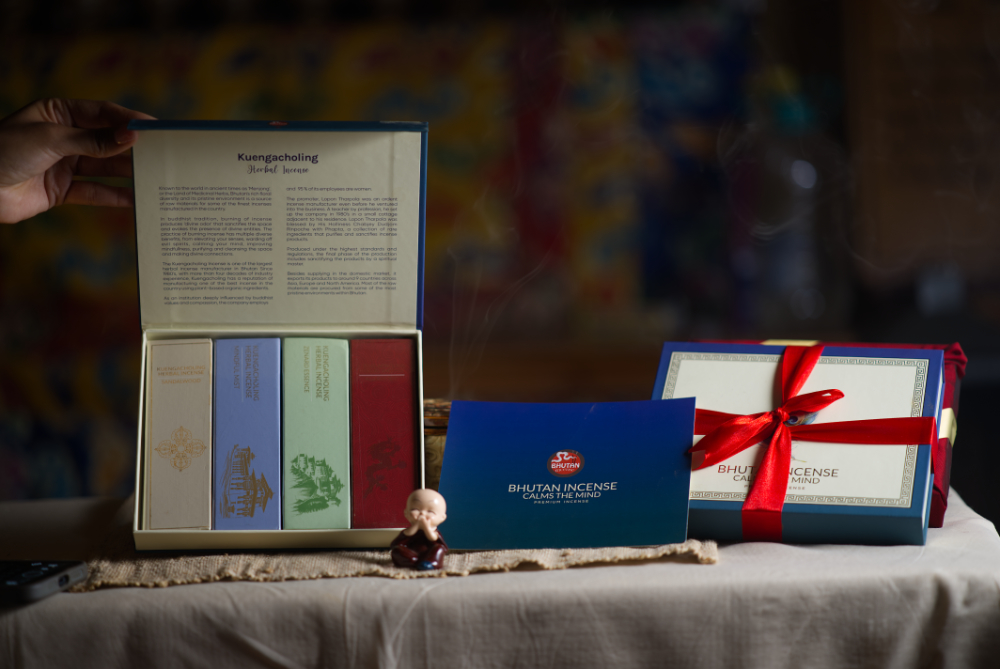
More than a hundred ingredients in a single stick, so beings of every realm benefit from the aroma.
Cut to length by hand, tied into bundles, and labelled, seven to eight grades, each with its own aroma.
Phabta, ingredients blessed by a great guru, is mixed into the rare grades. Without it the offering is considered incomplete.
Cleanliness is absolute. It is a product offered to the gods.
A teacher, a borrowed recipe, and forty bundles a day.
Bhutanese have burnt cypress leaves and twigs as an offering for as long as anything here has been written down, to the gods, to the living, to the dead. Kuénga Choling is a recent chapter in a very old habit.
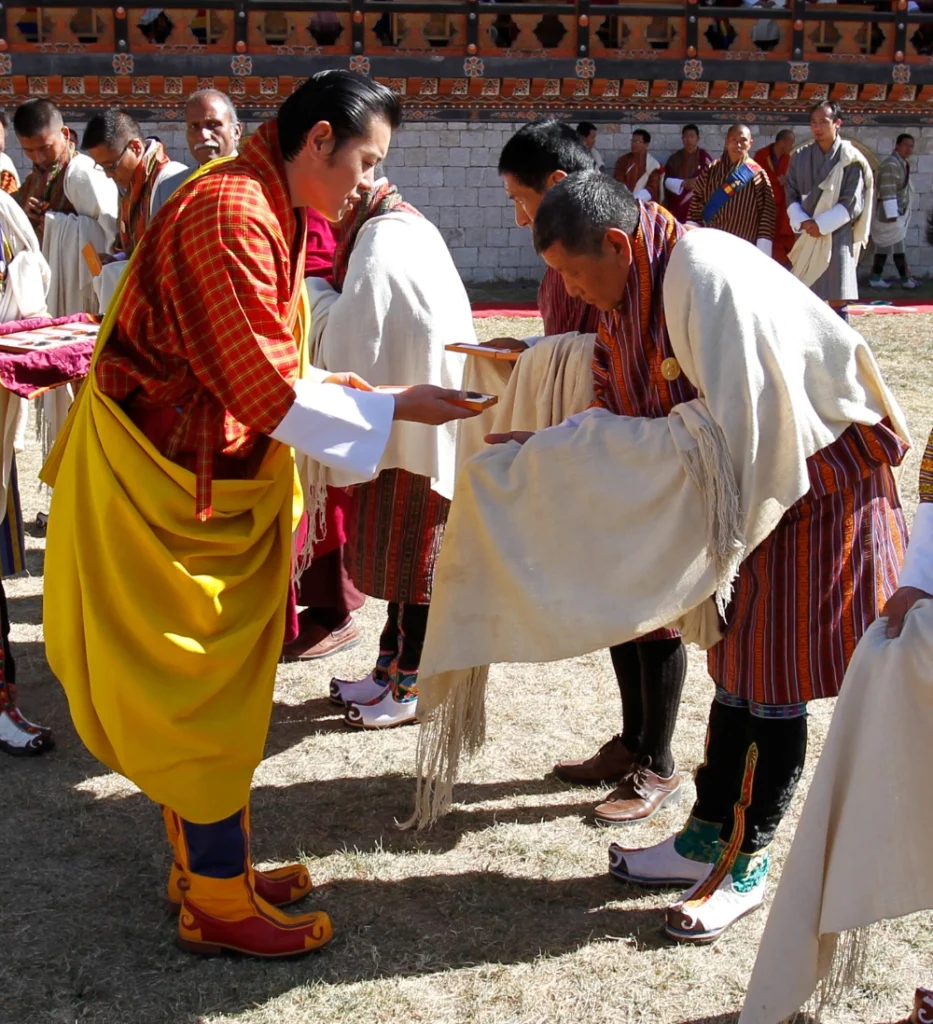
It begins with a Dzongkha teacher in the 1980s who believed the smoke his country loved could be made properly, and by hand, at home in Gelephu. Four decades on, the same family still runs the house, and the Je-Khenpo, Bhutan’s chief abbot, has come to
1966
1970s
1977
1980s
2010
2013
Present
The southern land of the cypress tree.
For centuries Bhutan sat hidden in the Himalayas as a rumour, a Shangri-la where dragons roared across the sky. Outsiders called it the Land of the Thunder Dragon.
Tibetan physicians who came looking for medicinal herbs found cypress growing across the mountains, spreading its fragrance for miles, and named the country the Southern Land of the Cypress Tree. That fragrance became the signature of Bhutanese incense, and Bhutanese still love the smell of fresh incense in the morning.
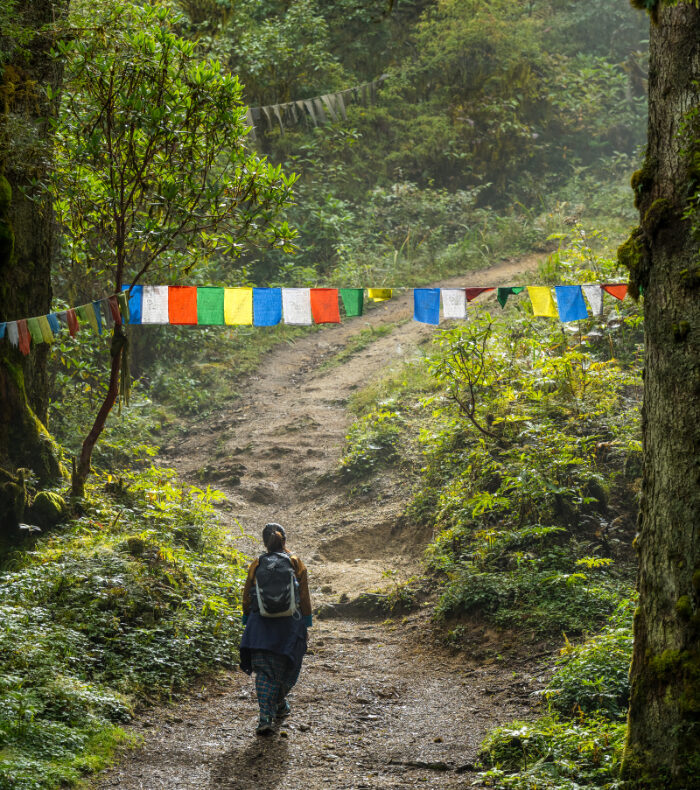
Sixty percent forest cover is written into the constitution. That forest supplies every ingredient we use, and every ingredient of traditional medicine besides.
Almost every Bhutanese home keeps a room for the gods. Incense offered there, alongside a butter lamp, is held to be the highest offering a household can make: it keeps the air pure, settles the mind, and clears what is heavy out of a house. Happiness is a stated goal of the government here — measured before national product. Incense is one of the small daily instruments of it.
Lopen Tharpola was named after a monastery and spent his life earning the name.
He was born near Tharpoling Monastery in Bumthang, and his uncle named him for the place. He studied at Simtokha Dzong, became a Dzongkha teacher, and was known from then on as Lopen — teacher — Tharpola.
Teaching took him to Dorokha in 1966 and to Kalimpong in West Bengal in the 1970s. There he met Dakpa Tandin, the first Tibetan incense master in eastern India, who promised to introduce him to His Holiness Chabjey Dejum Rinpoche in Themar, Nepal.
Every incense master must be blessed by a great guru before the craft is truly his. Lopen Tharpola received his Lung from Chabjey Dejum Rinpoche, together with a Phabta — a collection of ingredients blessed by the guru, to be mixed into the rare sticks. Incense made without it is considered an incomplete offering. To this day every batch we press carries some of that Phabta.
He went back to Kalimpong and sold his first sticks to the parents of his students. He retired from teaching in 1977, returned to Gelephu, and built the factory that still carries his recipe. He is one of very few Bhutanese to hold two national awards.
Kuengacholing Incense
The factory in Gelephu is open to visitors, retailers and distributors, and has been blessed more than once by Bhutan’s chief abbot. Write or call ahead and we will show you the rooms where it is mixed, pressed and dried.
ADDRESS
Gelephu Mindfulness City, Gelephu Special Administrative Region.
Kingdom of Bhutan
CONTACT
+975 77414024
bhutanincesne97@gmail.com